One stop shopping for snippets of wisdom from your Mother. :-)

Thursday, October 15, 2015

The Great Fermenting Experiment


How we feel, both emotionally and physically, has everything to do with the balance of 'good and bad' bacteria in our digestive system, more commonly referred to as the gut. The human body hosts tens of thousands of types of bacteria and the trick is getting them into balance.

Your digestive bacteria, also known as gut flora, actually regulates much of your immune system. If you are ill or suffer from a chronic condition or disease, chances are your gut flora is completely out of whack. In fact, with the diet of most Westerners containing processed foods, refined sugars and GMO non-organic foods, having a gut bacteria imbalance is quite common.

Not only are your body’s physical systems changed by the state of microbes in your gut, but your moods and emotions are as well. 95% of serotonin, the brain chemical which directly effects feelings of anxiety and depression, is manufactured in the gut. Likewise dopamine, which triggers our pleasure centers, is also created and regulated in the gut. With the imbalance in gut flora, many conditions arise that often present as psychological as well as physical.

From research over the past year I have learned what I thought was a good deal of information about how to help my body re-gain the balance it needs for optimal health. In recent years probiotics, the supplements containing micro-organisms for balancing these bacteria, have become quite popular in the field of alternative and natural health. But not only are store bought probiotics insanely expensive, most are not readily absorbed at the optimal place and time when digested. A natural and quite affordable alternative is fermented foods.

I started with an easy task - homemade sauerkraut. The ingredients include cabbage, a good sea salt or canning salt, and some time and patience. Later, I added Caraway Seeds to the recipe. A wonderful experience that is easy to make and lasts 6-8 months in the refrigerator, it is now a regular side dish on my plate.
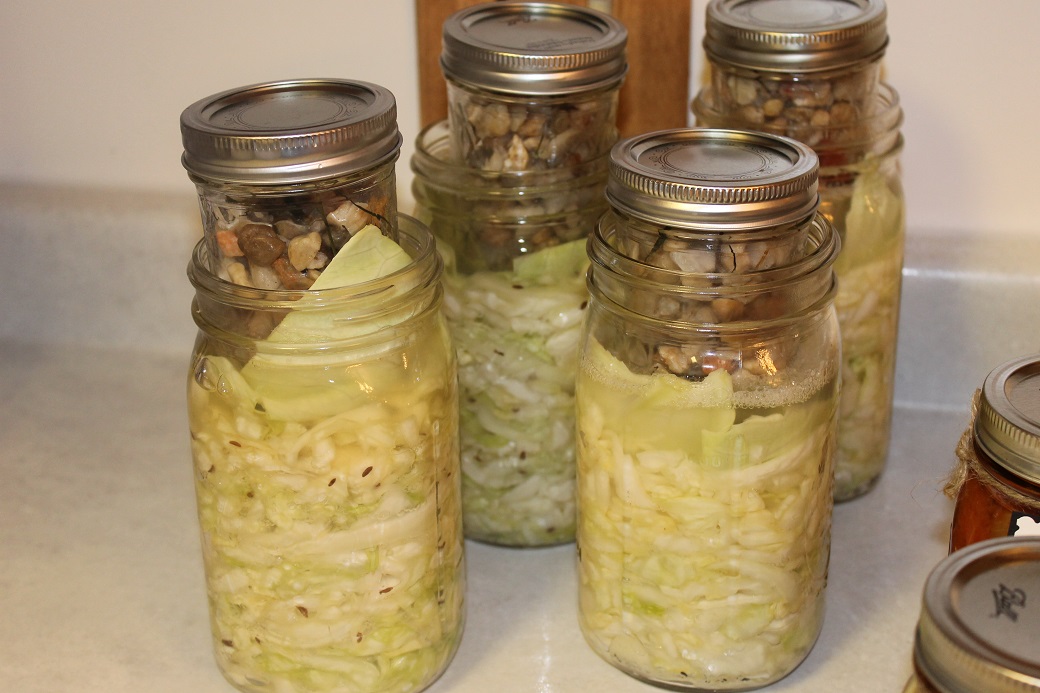
ferment sauerkraut
With the internet ablaze with helpful instructions and processes, I found a whole subculture of fermentation for food preservation and natural health that I never knew existed. Some seemed quite technical, involving 'starter' bacteria for the fermenting process. Others involved yogurts, which my family is not too keen about. So for the past year we stayed with our plain old kraut.

Then, blowing away all my previous research and time devoted to this subject, I ran across one simple article that explained I could ferment almost any fresh fruit or vegetable using my same easy-peasy salt method. Further, I could add any number of spices or herbs. Thus began the Great Fermenting Experiment.

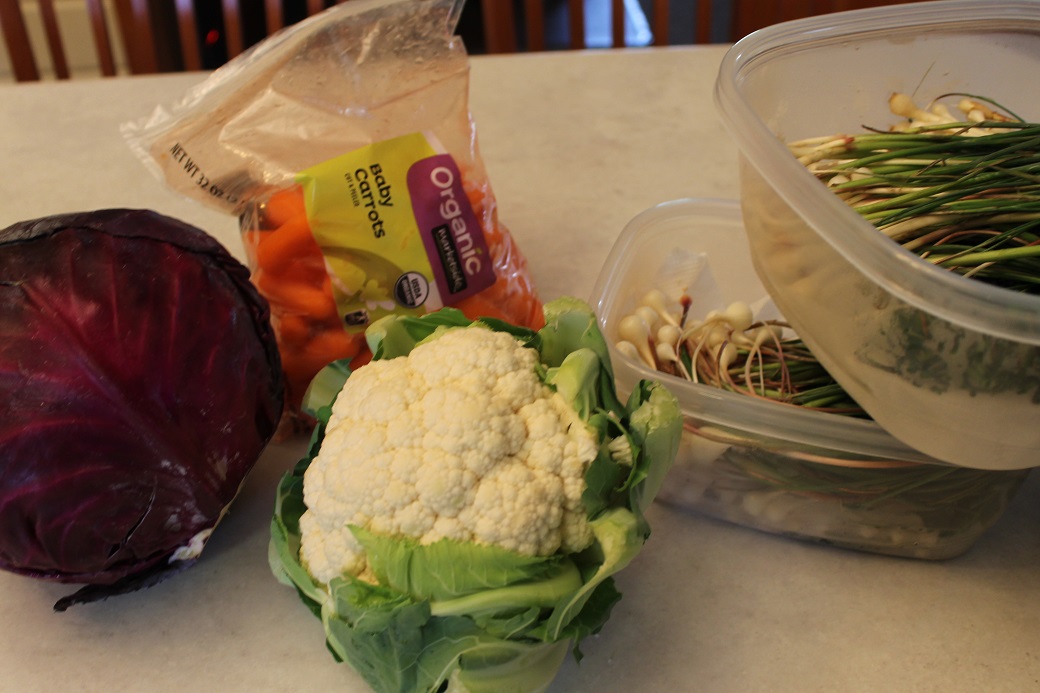
Taking a well planned trip down the mountain for supplies, I focused on red cabbage, organic baby carrots and cauliflower to add to the wild onions I dug up from our backyard forest. This was my first foray into chopping up red cabbage so here's a heads up note to newbies; it leaves a purple/red residue on cutting boards and counter tops that will come off, but only with a great deal of scrubbing.
fermenting 3
Following the directions from this article, I made a brine for fermenting with filtered water and canning salt. Nourishing Meals - How to Make Lacto Fermented Vegetables 

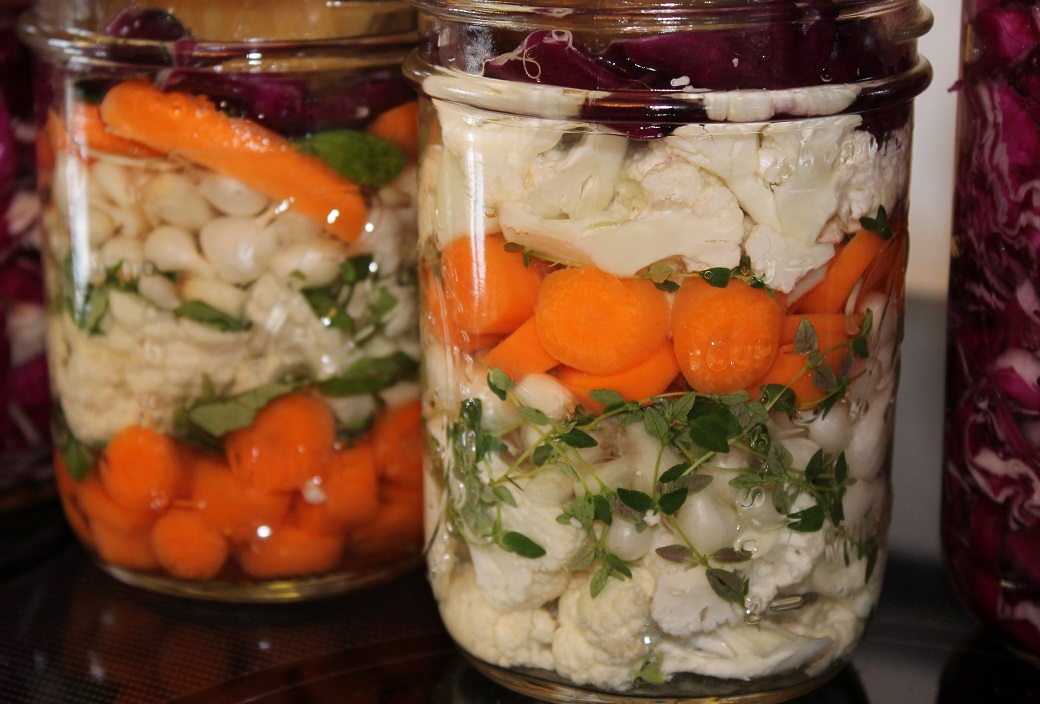
After washing, chopping and preparing all the veggies, washing the wide mouthed mason jars and finding small jelly jars to use as presses, I begin filling each jar with unique flavors. Some of the spices came from the pantry, but many I snipped right from the plants in the sun room.

The different spices and flavorings were added to veggies as follows:
Jar #1 - fresh oregano
Jar #2 – ground cayenne pepper
Jar #3 – mustard seeds & dill weed
Jar #4 – red pepper flakes
Jar #5 – fresh basil
Jar #6 – fresh thyme
Jar #7 – (red cabbage only) – caraway seeds
Jar #8 – (a variation of Kimchi) – ground ginger and red pepper
Jar #9 – mustard powder and mustard seeds
fermenting 2
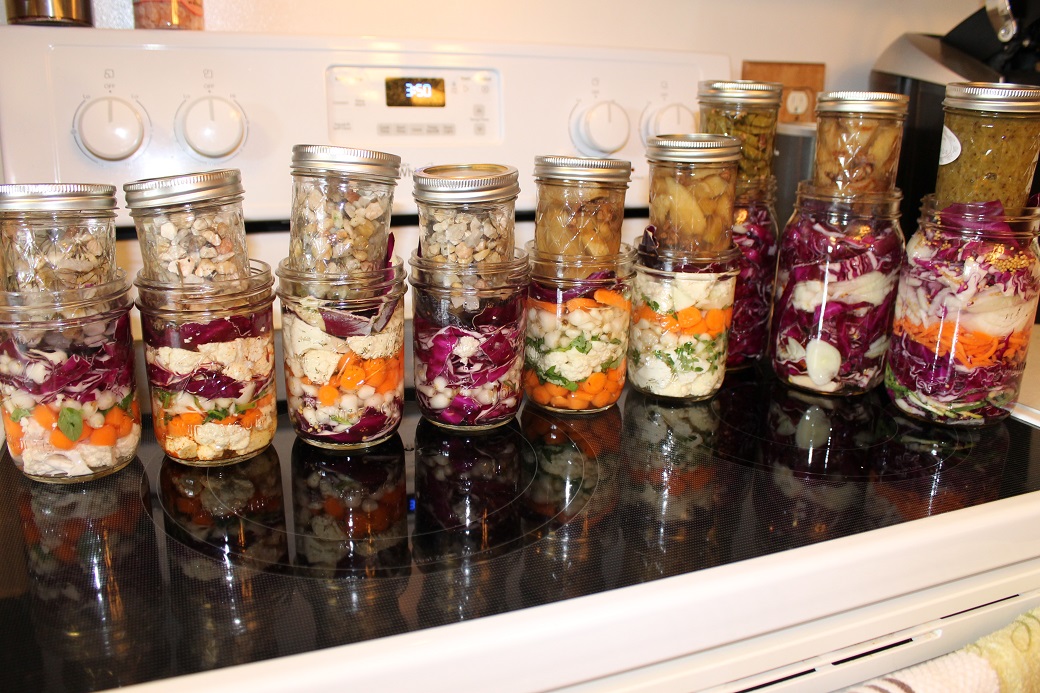
When finished, I covered the vegetables, herbs and spices with the salt water brine and covered the contents in each jar with a large cabbage leaf. I used a small jar of rocks or jelly to act as a press, depriving the vegetables of oxygen while the fermenting process worked its magic.

Fermenting can be left for 3 to 10 days depending upon the taste you prefer. After four days, I tasted each and decided they were very good, but I could stand them a tad sharper, so I left them to process for another few days. When fermented to my liking, I removed the submerged cabbage leaf covering the contents of each jar, screwed lids on them and put them in the refrigerator.

I can easily see why those who ferment caution against the risk of devouring a whole jar at once. It is that good. There is no risk health wise should that happen, just less for later.

Once covered and put in the fridge, these treats can last from 6-8 months, making this a wonderful method of preserving your fresh foods without heating and thus diminishing the most healthy parts.
Day One Fermentation

For more fermenting recipes:
The Nourished Kitchen http://nourishedkitchen.com/fermented-foods-for-gut-health/
Kid Friendly Fermenting Recipes http://www.homemademommy.net/2013/12/20-kid-friendly-fermented-foods.html
Paleo Leap http://paleoleap.com/fermented-food-recipes/
Fermentation Recipes http://fermentationrecipes.com/

For more information:
Fermented foods are foods that have been through a process of lactofermentation in which natural bacteria feed on the sugar and starch in the food creating lactic acid. This process preserves the food, and creates beneficial enzymes, b-vitamins, Omega-3 fatty acids, and various strains of probiotics. Natural fermentation of foods has also been shown to preserve nutrients in food and break the food down to a more digestible form. This, along with the bevy of probiotics created during the fermentation process, could explain the link between consumption of fermented foods and improved digestion. http://wellnessmama.com/2245/health-benefits-fermented-foods/

The human gut is an amazing piece of work. Often referred to as the "second brain," it is the only organ to boast its own independent nervous system, an intricate network of 100 million neurons embedded in the gut wall. So sophisticated is this neural network that the gut continues to function even when the primary neural conduit between it and the brain, the vagus nerve, is severed. (Citing the enteric nervous system's autonomy and apparent infallibility, comedian Stephen Colbert once christened the gut "the pope of your torso.") http://www.apa.org/monitor/2012/09/gut-feeling.aspx

Simply put, fermentation of vegetables happens when the natural bacteria in the vegetables break down the components of the vegetables into forms easier to digest and often more nutritious than the raw vegetable itself. For those who have apprehensions about food safety, Breidt said that fermented vegetables can be safer than raw vegetables, thanks to the ability of lactic acid, which forms during fermentation, to hunt down and kill any harmful bacteria that might be present. http://www.foodsafetynews.com/2014/03/fermenting-veggies-at-home-follow-food-safety-abcs/#.VTvsppPm4VA

IT’S been a tough morning. You were late for work, missed a crucial meeting and now your boss is mad at you. Come lunchtime you walk straight past the salad bar and head for the stodge. You can’t help yourself - at times of stress the brain encourages us to seek out comfort foods. That much is well known. What you probably don’t know, though, is that the real culprit may not be the brain in your skull but your other brain. http://neurosciencestuff.tumblr.com/post/38271759345/gut-instincts-the-secrets-of-your-second-brain

What many people do not understand is that serotonin also plays a role in gastrointestinal disorders. In fact, the majority of our serotonin is produced in the gut, roughly 95%. http://robbwolf.com/2013/01/10/serotonin-gastrointestinal-disorders/

So, you’ve started your lactofermentation journey, perhaps making some naturally fermented pickles or sauerkraut. You’ve mastered the basics, but have some questions about how to make your ferments really successful. Look no further! Here are a few time-tested tricks that result in amazingly tasty ferments. http://homestead-honey.com/2015/02/09/tips-tricks-successful-fermentation/

Saturday, July 11, 2015

Light Reading


Free books, papers and other resources (most in .pdf format) to download and read.

Latest Additions (2015):

Consciousness and Spirituality

Science and Theory

Politics and Economics

Gardening, Homesteading and Sustainable Living

Other Books and References

Fiction

Thursday, July 9, 2015

Amazing Aloe


Aloe Vera (aloe barbadensis) is a known anti-inflammatory and anti-microbial.

As with many natural healing substances, aloe has an amazing history. Used to treat tuberculosis in ancient Egypt, by the Mesopotamians to ward off evil and even mentioned in the Bible to have been grown by King Solomon, the properties of aloe have been long acknowledged. Read much more here and here.

Keeping healthy aloe plants on hand can replace a plethora of items we buy at the drug store which usually include additional chemicals that are, in my opinion, often unnecessary. A snippet from the end of an aloe stalk will contain sticky juice to apply topically for many benefits.

In our household uses Aloe for the following purposes:
  1. For minor kitchen burns while cooking, including grease splatters.
  2. To soothe and help heal sunburns.
  3. For poison ivy, poison sumac reactions.
  4. To help heal most skin conditions including acne, eczema, dry skin, etc..
  5. Soothes blisters and helps healing.
  6. Relieves the itching and helps heal bug bites.
  7. Helps to minimize scarring from cuts and scrapes.
  8. Aids in the tissue repair from bruises.
For more information:

An entire website devoted to information about Aloe. http://www.aloeplant.info/

Would you be surprised if I told you aloe vera gel was clear? If not, why put a gel with green dye and perfumes on the largest organ you have?  Not only does it have dye, but that green Banana Boat goop has SD Alcohol 40, Glycerin, polysorbate 2, and more. Making your own homemade aloe vera gel could not be any easier. http://blog.allisonlehman.com/2012/07/homemade-aloe-vera-gel/

It doesn't hurt that aloe vera produces at least six natural antiseptics, which are able to kill mold, bacteria, funguses, and viruses. In fact, the plant is so powerful that researchers and scientists are looking into its potential as an AIDS and cancer-fighter. 40 Amazing uses for Aloe Vera! http://health.howstuffworks.com/wellness/natural-medicine/herbal-remedies/amazing-aloe-vera.htm

Aloe vera is one of the easiest houseplants to grow. It requires little in the way of care—simply an occasional watering, warm conditions, and (depending on who you ask) a bit of fertilization now and then. And with this easily grown plant in your home, you are opening yourself to a wealth of medicinal uses. For many, the path to herbalism at home begins with the aloe plant. http://naturalsociety.com/health-benefits-of-aloe-vera-grow-own-medicine/

Aloe demonstrated antioxidant and anti-inflammatory properties (9) and Aloe vera cream was shown to be superior to silver sulfadiazine creams for the treatment of second-degree burns (21).
Studies also suggest that constituents of aloe, such as acemannan, aloeride, and di(2-ethylhexyl)phthalate (DEHP) have immunomodulating and anticancer effects (5) (7) (8). Emodin from Aloe vera inhibited cell proliferation and induced apoptosis in human liver cancer cell lines through p53- and p21-dependent pathways (4). http://www.mskcc.org/cancer-care/herb/aloe-vera

This living “first-aid kit” did so much for me — after nothing else had brought me relief — that I wanted to learn all I could about it. In order to get an expert opinion, I looked up a biochemist who was studying the plant. This researcher confessed that Aloe vera’s curative properties defy accurate scientific analysis. He had discovered, though, one reason why the spiny-leaved plants heal so effectively: They contain numerous cleansing agents and catalysts, as well as (apparently) “every compound essential to the formation and proper function of the human cell.” http://www.motherearthnews.com/natural-health/aloe-vera-medicinal-uses-zmaz79mjzraw.aspx#axzz2wQjLIppn

The 2011 2nd edition of Herbal Medicine: Biomolecular and Clinical Aspects cites the extraordinarily long use of aloe vera for its therapeutic benefits, both internal and external. [1] Its use extends as far back as biblical times and was mentioned in the New Testament as an herb for embalming. http://www.globalhealingcenter.com/natural-health/benefits-of-aloe-vera/ (Many excellent clinical studies referenced beneath this article.)

Rich in vitamins A, C, E, B1, B2, B12 and many more, the gel can effectively be used to help heal cuts and burns. Aloe has also been linked to assist with detoxification, alkalinity, digestion, the immune system, skin health and much more. It truly is a super plant that can even be easily grown in a small pot on a window sill. http://www.naturalblaze.com/2013/07/5-household-plants-for-purified-house.html

More information and uses for aloe: http://en.mr-ginseng.com/aloe-vera/

Wednesday, July 8, 2015

Hugs


Hugs are free. They can come in unlimited supplies. They are readily available and accessible. So far they aren’t taxed. And if the Federal Reserve starts handing them out in droves, it won’t even dilute the ones you already have. :-)

When we give or receive a hug, our bodies release a naturally occurring hormone called oxytocin. The effect is what makes us feel all warm and fuzzy inside and promotes our ability to emotionally bond. Psychologists think this contributes to the physical aspect of how we establish and maintain trust and develop ties of commitment.

Not only does the act of hugging increase the good aspects of how we feel, but it helps eliminate the bad by drastically reducing our levels of cortisol, also known as the stress hormone. Hugging stimulates dopamine, the pleasure hormone, and serotonin, for elevated mood, leading to happier places.

But wait, there’s more. Hugs make the part of the brain known as the orbital frontal cortex light up the same way as when we eat chocolate, only less fattening.

Hugging doesn’t just make us feel better, it actually improves our health. Studies have shown hugs lower heart rate and blood pressure. It improves our memory. More hugs mean more oxytocin which equates to less fatigue, fewer infections and a boosted immune system.

Finding a reason or excuse to hug is easy. Many occasions such as hellos, goodbyes or congratulations are wonderful ways to share a hug. Holidays, special occasions and events present many opportunities for hugging. It is a wonderful way to express appreciation.

But you need to be aware there are side effects. Hugging can cause habitual smiling and sometimes lead to laughter. Hugs can sometimes result in hand holding and promote feelings of devotion and connectedness. Hugs should not be attempted while on tall ladders, when driving or traversing tightropes. The person beside you should be consulted in the case of occasional group hugs. Hugging is not for the deliberately grumpy or intentional misanthropic.

A genuine hug is a beautiful thing.

An epic video about hugs:


With age, you get to a place where you don't want to knock people out. You just want to give people a hug.  Vin Diesel

Touch, a key component of traditional healing, is being increasingly studied in mainstream medicine, with some trials showing symptom benefits in a number of areas, from asthma and high blood pressure to migraine and childhood diabetes. Other research findings hint that not only does touch lower stress levels, but that it can boost the immune system and halt or slow the progress of disease. http://www.independent.co.uk/life-style/health-and-families/health-news/how-the-power-of-touch-reduces-pain-and-even-fights-disease-419462.html

The surging of oxytocin makes you feel more trusting and connected. And the cascade of electrical impulses slows your heart and lowers your blood pressure, making you feel less stressed and more soothed. Remarkably, this complex surge of events in the brain and body are all initiated by a simple, supportive touch. http://www.npr.org/templates/story/story.php?storyId=128795325

Happiness Weekly compiled even more fun facts about hugging that highlight just how incredible this act of touch really is. For instance, a full-body hug stimulates your nervous system while decreasing feelings of loneliness, combating fear, increasing self-esteem, defusing tension, and showing appreciation. http://articles.mercola.com/sites/articles/archive/2014/02/06/hugging.aspx

The Science of Hugs: The Most Undervalued Gift You Can Give http://kulraj.org/2014/09/09/science-of-hugs/

How hugging can lower your blood pressure and boost your memory http://www.dailymail.co.uk/health/article-2266373/Hugging-lower-blood-pressure-boost-memory.html

10 Reasons Why We Need at Least 8 Hugs a Day http://www.mindbodygreen.com/0-5756/10-Reasons-Why-We-Need-at-Least-8-Hugs-a-Day.html

Benefits of Hugs, for Mind and Body http://www.psychologytoday.com/blog/unified-theory-happiness/201406/4-benefits-hugs-mind-and-body

10 Reasons Why Oxytocin Is The Most Amazing Molecule In The World http://io9.com/5925206/10-reasons-why-oxytocin-is-the-most-amazing-molecule-in-the-world

The Healing Power of Touch http://www.sparkpeople.com/resource/wellness_articles.asp?id=1818

free hugs

Tuesday, July 7, 2015

The Great Fermenting Experiment


How we feel, both emotionally and physically, has everything to do with the balance of 'good and bad' bacteria in our digestive system, more commonly referred to as the gut. The human body hosts tens of thousands of types of bacteria and the trick is getting them into balance.

Your digestive bacteria, also known as gut flora, actually regulates much of your immune system. If you are ill or suffer from a chronic condition or disease, chances are your gut flora is completely out of whack. In fact, with the diet of most Westerners containing processed foods, refined sugars and GMO non-organic foods, having a gut bacteria imbalance is quite common.


Not only are your body’s physical systems changed by the state of microbes in your gut, but your moods and emotions are as well. 95% of serotonin, the brain chemical which directly effects feelings of anxiety and depression, is manufactured in the gut. Likewise dopamine, which triggers our pleasure centers, is also created and regulated in the gut. With the imbalance in gut flora, many conditions arise that often present as psychological as well as physical.

From research over the past year I have learned what I thought was a good deal of information about how to help my body re-gain the balance it needs for optimal health. In recent years probiotics, the supplements containing micro-organisms for balancing these bacteria, have become quite popular in the field of alternative and natural health. But not only are store bought probiotics insanely expensive, most are not readily absorbed at the optimal place and time when digested. A natural and quite affordable alternative is fermented foods.

I started with an easy task - homemade sauerkraut. The ingredients include cabbage, a good sea salt or canning salt, and some time and patience. Later, I added Caraway Seeds to the recipe. A wonderful experience that is easy to make and lasts 6-8 months in the refrigerator, it is now a regular side dish on my plate.


With the internet ablaze with helpful instructions and processes, I found a whole subculture of fermentation for food preservation and natural health that I never knew existed. Some seemed quite technical, involving 'starter' bacteria for the fermenting process. Others involved yogurts, which my family is not too keen about. So for the past year we stayed with our plain old kraut.

Then, blowing away all my previous research and time devoted to this subject, I ran across one simple article that explained I could ferment almost any fresh fruit or vegetable using my same easy-peasy salt method. Further, I could add any number of spices or herbs. Thus began the Great Fermenting Experiment.

Taking a well planned trip down the mountain for supplies, I focused on red cabbage, organic baby carrots and cauliflower to add to the wild onions I dug up from our backyard forest. This was my first foray into chopping up red cabbage so here's a heads up note to newbies; it leaves a purple/red residue on cutting boards and counter tops that will come off, but only with a great deal of scrubbing.


Following the directions from this article, I made a brine for fermenting with filtered water and canning salt. Nourishing Meals - How to Make Lacto Fermented Vegetables 

After washing, chopping and preparing all the veggies, washing the wide mouthed mason jars and finding small jelly jars to use as presses, I begin filling each jar with unique flavors. Some of the spices came from the pantry, but many I snipped right from the plants in the sun room.

The different spices and flavorings were added to veggies as follows:
Jar #1 - fresh oregano
Jar #2 – ground cayenne pepper
Jar #3 – mustard seeds & dill weed
Jar #4 – red pepper flakes
Jar #5 – fresh basil
Jar #6 – fresh thyme
Jar #7 – (red cabbage only) – caraway seeds
Jar #8 – (a variation of Kimchi) – ground ginger and red pepper
Jar #9 – mustard powder and mustard seeds

When finished, I covered the vegetables, herbs and spices with the salt water brine and covered the contents in each jar with a large cabbage leaf. I used a small jar of rocks or jelly to act as a press, depriving the vegetables of oxygen while the fermenting process worked its magic.

Fermenting can be left for 3 to 10 days depending upon the taste you prefer. After four days, I tasted each and decided they were very good, but I could stand them a tad sharper, so I left them to process for another few days. When fermented to my liking, I removed the submerged cabbage leaf covering the contents of each jar, screwed lids on them and put them in the refrigerator.

I can easily see why those who ferment caution against the risk of devouring a whole jar at once. It is that good. There is no risk health wise should that happen, just less for later.

Once covered and put in the fridge, these treats can last from 6-8 months, making this a wonderful method of preserving your fresh foods without heating and thus diminishing the most healthy parts.


For more fermenting recipes:
The Nourished Kitchen http://nourishedkitchen.com/fermented-foods-for-gut-health/

Kid Friendly Fermenting Recipes http://www.homemademommy.net/2013/12/20-kid-friendly-fermented-foods.html

Paleo Leap http://paleoleap.com/fermented-food-recipes/

Fermentation Recipes http://fermentationrecipes.com/


For more information:

Fermented foods are foods that have been through a process of lactofermentation in which natural bacteria feed on the sugar and starch in the food creating lactic acid. This process preserves the food, and creates beneficial enzymes, b-vitamins, Omega-3 fatty acids, and various strains of probiotics. Natural fermentation of foods has also been shown to preserve nutrients in food and break the food down to a more digestible form. This, along with the bevy of probiotics created during the fermentation process, could explain the link between consumption of fermented foods and improved digestion. http://wellnessmama.com/2245/health-benefits-fermented-foods/

The human gut is an amazing piece of work. Often referred to as the "second brain," it is the only organ to boast its own independent nervous system, an intricate network of 100 million neurons embedded in the gut wall. So sophisticated is this neural network that the gut continues to function even when the primary neural conduit between it and the brain, the vagus nerve, is severed. (Citing the enteric nervous system's autonomy and apparent infallibility, comedian Stephen Colbert once christened the gut "the pope of your torso.") http://www.apa.org/monitor/2012/09/gut-feeling.aspx

Simply put, fermentation of vegetables happens when the natural bacteria in the vegetables break down the components of the vegetables into forms easier to digest and often more nutritious than the raw vegetable itself. For those who have apprehensions about food safety, Breidt said that fermented vegetables can be safer than raw vegetables, thanks to the ability of lactic acid, which forms during fermentation, to hunt down and kill any harmful bacteria that might be present. http://www.foodsafetynews.com/2014/03/fermenting-veggies-at-home-follow-food-safety-abcs/#.VTvsppPm4VA

IT’S been a tough morning. You were late for work, missed a crucial meeting and now your boss is mad at you. Come lunchtime you walk straight past the salad bar and head for the stodge. You can’t help yourself - at times of stress the brain encourages us to seek out comfort foods. That much is well known. What you probably don’t know, though, is that the real culprit may not be the brain in your skull but your other brain. http://neurosciencestuff.tumblr.com/post/38271759345/gut-instincts-the-secrets-of-your-second-brain

What many people do not understand is that serotonin also plays a role in gastrointestinal disorders. In fact, the majority of our serotonin is produced in the gut, roughly 95%. http://robbwolf.com/2013/01/10/serotonin-gastrointestinal-disorders/

So, you’ve started your lactofermentation journey, perhaps making some naturally fermented pickles or sauerkraut. You’ve mastered the basics, but have some questions about how to make your ferments really successful. Look no further! Here are a few time-tested tricks that result in amazingly tasty ferments. http://homestead-honey.com/2015/02/09/tips-tricks-successful-fermentation/

Wednesday, November 5, 2014

Chocolate Chip Pumpkin Bread

Another household favorite that we were anxious to replace when going gluten free was our holiday chocolate chip pumpkin bread. (This recipe is the same with regular flour.) It is our “go-to” traditional gift for kids’ school teachers, co-workers, extended family members or anyone else we wish to bestow some holiday cheer upon.

After a few batches of experimentation, we were able to adapt our traditional recipe into a gluten free version that was equally delicious.

Preheat oven to 350 °

In a large bowl combine:
  1. 2 ¾ cups of sugar
  2. ¾ cup of vegetable (we now use coconut) oil
  3. 3 eggs  – mix together well
Then add to the mix:
  1. 3 ¼ cups of all purpose (Gluten Free flour - we prefer Bob’s Red Mill)
  2. ¾ tsp. baking powder
  3. 2 tsp. baking soda
  4. 1 tsp. of each: nutmeg, cinnamon, allspice and ground cloves
  5. One can of pumpkin (approx. 30 oz.) – mix well
6.  Add ½ cup of water and mix all ingredients until smooth

Here is where you can get creative: We add a 20 oz bag of dark chocolate chips (both Nestle and Hershey’s brands are gluten free). You may prefer to add only a 10 oz. bag of chocolate chips. I prefer walnuts, but not everyone does so sometimes I will add them to a few special loaves at the end.
This recipe makes about 5 to 6 small loaves or two regular sized bread loaves. Remember with GF cooking to grease and flour your pans with gluten free flour.

Baking times vary dramatically with elevations and oven types. I find the small loaves are usually baked in approximately 50 minutes (with a convection oven at 3,000 ft.), but sometimes it has taken longer. The larger loaves bake for approximately 70 minutes, but check one after 60 minutes to gauge the baking time in your oven.  After you determine the best baking time for each size you are baking, you may want to note it for future reference.

We have found these loaves freeze well, so after wrapping the finished product twice in foil, we mark the GF bread with a special colored ribbon so it is always easy to find in a few months when digging through the freezer for a special treat. Enjoy!

Tuesday, November 4, 2014

Oil Pulling


Hi guys,

Here is a way people have helped keep their mouths and teeth healthy for thousands (yes thousands) of years. Lots of good links and a free book to download for you.

Pulling toxins from your body and ridding your mouth and gums of bacteria by swishing? Really? Well it appears it’s been done for thousands of years.

There is a wonderful ebook (115 pages) from oilpulling.com available here for free download with plenty of good information on the practice of oil pulling.

This is one of those natural practices that have almost zero clinical studies, except for a few supposedly “debunking” it, and several that are just from India, as if that somehow disqualifies them from being relevant. Since oil pulling is an ancient Ayurvedic tradition that focuses on whole body, mind and spirit wellness, it does not surprise me in the least that it is heavily downplayed in Western Medicine. Big Pharma can’t patent swishing with a natural substance…yet.

In addition, quite recently the mainstream media has taken to an subtle attack campaign describing oil pulling as a quaint “fad” even as they acknowledge that it has been used for thousands of years lol. Here you can see some of those efforts at U.S. News & World Report, at the Wall Street Cheat Sheet, The Atlantic, and several from the Huffington Post here and here.  Naturally, the online “author-ities” for Big Pharma and the associated academic have chimed in with “lack of hard evidence” shpeel from the regulars at WedMD, at sciencebasedmedicine, and the ever reliable ABC News.

As seems common with most natural remedies and preventatives that I research, there are many opinions on the right way to do it and the correct oil to use. After reading over a hundred articles and publications I can summarize here.

People have had success with coconut oil, sesame oil and sunflower oils. Many claim the more pure, virgin and organic the oil, the better the results, but note that many people are blogging about their successes with regular refined, less expensive, off the shelf sunflower or coconut oils and seem to find them quite effective as well. Most agree that swishing for 20 minutes per day does the trick. Instructions say to always spit it out afterwards, as contains bacteria and toxins that you want to expel from your body, not ingest.

I have practiced oil pulling for over a year. I swish for twenty minutes beginning just before I get in the shower and spitting just after I get out when I can then brush my teeth. In that time my teeth are noticeably whiter, any sensitivity I had towards hot or cold food and drink has vanished, and I have had no new dental problems at all.

My personal conclusion is that either this practice does indeed work wonders, or I have succumbed to a wonderfully powerful placebo effect which benefits me greatly.

Much more information:

The basic idea is that oil is swished in the mouth for a short time each day and that this action helps improve oral health. Just as with Oil Cleansing for the skin, the principle of “like dissolves like” applies, as oil is able to cut through plaque and remove toxins without disturbing the teeth or gums. http://wellnessmama.com/7866/oil-pulling-for-oral-health/

Clinical Study that shows oil pulling removes bacteria from the mouth and body: http://www.ncbi.nlm.nih.gov/pubmed/18408265 and here: http://www.asiaph.org/admin/img_topic/6096Sroisiri.pdf  and here: http://www.ijdr.in/article.asp?issn=0970-9290;year=2009;volume=20;issue=1;spage=47;epage=51;aulast=Asokan

Some practitioners feel that oil swishing has systemic effects and can actually help remove toxins from the body, thereby supporting all organ systems. I don’t have enough experience with oil swishing to have an opinion on this, but in trying oil swishing with a handful of clients over the past year, I can definitely vouch for its ability to reduce plaque, support healthy gums, and neutralize acids that contribute to dental cavities. http://www.wakingtimes.com/2013/09/09/oil-swishing-support-healthy-teeth-gums/

Its oil pulling (Kaval, Gandush) practice is claimed to cure about 30 systemic diseases. http://www.ncbi.nlm.nih.gov/pubmed/21760690

Other oils such as extra virgin cold pressed  coconut, sunflower and olive oil have been used, although sesame oil is considered one of the best oils for this practice. I recommend alternating oils every couple of days to get the full benefit. Putting high quality organic oils into the mouth has a multi-effect outcome. http://www.foodmatters.tv/articles-1/oil-pulling-the-habit-that-can-transform-your-health

Even with the best dental hygiene, germs can still get the upper hand over health. When our oral condition is in bad shape, it effects every system of the body. Take for instance cognitive decline. According to GreenMed Info, periodontal disease has been linked with stroke and cognitive impairment in numerous studies. Attikon University Hospital in Greece showed a clear correlation between periodontal disease and stroke. Likewise, the University of Alabama School of Dentistry discovered in a 9,853-participant study that tooth loss was strongly connected to cognitive decline. http://www.naturalnews.com/040293_oil_pulling_cognitive_decline_home_remedies.html

Long-term oil pulling has, for instance, also been linked to healthier hair, clearer skin, whiter teeth, elimination of parasites, improved body odor and the easing of joint pains. It is, in short, a full-body cleanse, and anyone with $5 to spare on good-quality oil can reap its health benefits. http://spiritfoods.net/oil-pulling-routine-for-detoxification/

Ancient Ayurvedic health practitioners believed that oil pulling could reduce more than just diseases of the mouth and throat. Today, many holistic practitioners tout its use for a variety of health concerns. It is believed that these oils help the lymphatic system of the body as harmful bacteria are removed and beneficial micro flora are given with a healthy environment to flourish. Because of this holistic perspective, oil pulling has been used as a preventative health measure for many other conditions. http://www.globalhealingcenter.com/natural-health/oil-pulling/#3

Swishing activates the enzymes, and the enzymes draw toxins out of the blood. More specifically, lipids in the oil help to extract toxins from the saliva of the mouth. As you swish the oil around your mouth, teeth, gums, and tongue, the oil continues to absorb toxins while later turning thick and white. At this point, the oil becomes toxic; this is why spitting the oil out instead of swallowing it is an important last step, as you don’t want to reabsorb the toxins. http://naturalsociety.com/oil-pulling-benefits-what-is-oil-pulling-anyway/

Oil pulling is an ancient Ayurvedic method for detox and rejuvenation. It’s a simple practice, with quite remarkable results. Many have heard of it, but never actually dove in to try it. It definitely has a mystical and exciting vibe around it, which made me eager to try. But what exactly is it? What does it do? http://www.mindbodygreen.com/0-7857/why-you-should-start-oil-pulling-today.html

Leslie Laing, associate professor dentistry at the University of Toronto, decided to do an informal experiment to see if oil pulling has any real results. She prescribed oil pulling to 12 female patients who suffer from Sjogren’s syndrome, an immune system disorder that results in dry eyes and dry cheeks that have to be “peeled off their teeth” when they wake up in the morning. Laing’s patients did oil pulling for 20 minutes every night for three weeks. The results were surprising to Laing. The patients’ mouths were moister, their teeth glossier. Cavity-causing bacteria were reduced, as was the yeast that causes oral thrush. The Star reports: “Reducing these yeast levels can have help with bloating, gas, diarrhea, constipation, fatigue, headaches, and even depression.” http://www.treehugger.com/health/does-oil-pulling-actually-work.html

Plaque accumulates along the base of your teeth, causing little pockets to form under your gums. These pockets become home to harmful bacteria. The bacteria produce toxins (real ones, not “woo woo” mystical ones) that irritate your gums, causing inflammation and bleeding. This is gingivitis. It’s basically a factory of toxicity in your mouth, happily tucked away up under your gums, overloading your immune system with bacterial exotoxins and endotoxins every single time you swallow. And how does oil pulling fit in? Well, that’s an interesting question. http://www.care2.com/greenliving/oil-pulling-heals-gums-whitens-teeth-naturally.html

Dr. Karach explained that his method could heal a disease at the root, and also act as a preventative. His belief was also backed by experience; he healed himself of a chronic blood disease that had troubled him for 15 years. He even reported to have cured his acute arthrosis by oil pulling in just 3 days’ time. His belief was that humans were only living to half of their life capacity because of unnecessary disease, and that man should live easily to 140-150 years old. http://www.youngandraw.com/oil-pulling-to-naturally-whiten-teeth-reduce-inflammation-and-detoxify-the-body/

Studies are on-going, but the procedure is gaining more and more popularity as people are finding success and positive results with oil pulling.  We will explain the details of oil pulling later in this article, but the basics involve pulling and swishing 1 tablespoon of Coconut, Olive, Grapeseed or some other quality oil around your mouth and through your teeth for up to 20 Min., then spitting.  The therapy is simple and completely harmless, as you do not ingest medication or drugs. http://www.everythingessential.me/ApplyingOils/OilPulling.html

Monday, September 15, 2014

Food is The New HealthCare

One of the best things to come out of the sudden revelation that nothing is what it seems is the knowledge that I can be self reliant enough to keep myself well. Having just scratched the surface of research into ancient natural practices that enabled people to live far longer lives while enjoying a much higher physical quality of life, it was all news to me.

Real food is defined in various ways. One seemingly sound theory on “genuine” food says the less you do to food between the time it is grown or raised and when you consume it, the better it is. This generally works for me as it makes it much easier to source where food comes from and what it really is.

The unsung benefits of many foods and spices is mind-boggling once we begin the trip down the rabbit hole.

Did you know there are increasing reports that Alzheimer’s can be reversed (implying prevented as well) by simply mixing coconut oil into your food each day? It cues the body to make ketones which reverse the condition in the brain. There are dozens of more stories and studies like these here, here, and here are a few more.

Walnuts have been proven to reduce and prevent cardiovascular disease and prevent diabetes. The amazing medicinal power of blueberries in aiding vision and fighting UTI’s and many more treatments/preventatives are well documented. Fresh spinach for cognitive and anti-cancer benefits, tomatoes are rich with lycopene, a powerful antioxidant to fight cancer and potassium to help regulate healthy blood pressure, and sweet potatoes are steeped in Vitamins B, C and D as well as iron and magnesium giving a monster boost to immunity and an acknowledged natural substitute for hormone replacement therapy and gastro disorders. The lists go on and on and the internet is full of resources on the medicinal value of any natural food you might enjoy.

I imagine like myself, you may not be used to eating these fresh healthy foods all the time. Processed unhealthy foods are created to be addictive by design. Junk carbs actually stimulate our hunger centers for more, rather than becoming satisfied with our intake. There are plenty of resources available on the internet for free that can help with tips to retrain the yen for junk cravings.

Fear not. If the switch to natural foods for our health maintenance needs seems daunting, we can always pop over to WedMD and find warnings of the side effects and interactions of tomatoes and other foods that might be considered medicinal. The big pharma backed medical establishment is ever ready to support your limiting these healthy alternatives that as of yet cannot be patented.
The bottom line is every snack I can substitute something healthy for something that isn’t is big progress. I have actually had to throw away what was once considered yummy junk food in the house, because fruits and nuts were eaten instead. Bringing healthy homemade soup to work, packing a fresh salad with crunchy nuts when we leave the house, coveting gluten free granola treat recipes and cooking up extras with dinner to have for lunches throughout the week are all ways to transition to healthful diets.

Read More:

Food is medicine – that’s the mantra of culinary medicine. As a pioneer in the field, Dr. John La Puma maintains that food is the best way to prevent, treat and even reverse illness. He’s harnessed the power of a healthy diet to fight obesity, diabetes, arthritis, metabolic syndrome, heart disease and depression. Even your cancer risk could be reduced – over 80% of cancers are caused by controllable lifestyle factors, which include diet. http://www.doctoroz.com/videos/culinary-medicine-healing-food

Some of the most powerful medicines on the planet are masquerading around as foods and spices. While they do not lend themselves to being patented, nor will multi-billion dollar human clinical trials ever be funded to prove them efficacious, they have been used since time immemorial to both nourish our bodies, and to prevent and treat disease.  So valued were these in ancient times that they were worth their weight in gold, and entire civilizations either rose to great power or collapsed as a result of their relationship to them. http://www.greenmedinfo.com/blog/5-food-medicines-could-quite-possibly-save-your-life

Food as medicine is at the heart of natural health. Most, if not all, modern diseases are caused by years of wrong eating. Pretty much all of them can be cured by right eating. While good, natural food will lead you back to full health, there are times when a specific food acts as medicine to help heal or cure. http://www.natural-health-for-you.com/food-as-medicine.html

Americans are bombarded with information about “healthy eating,” but we suffer from higher rates of obesity and chronic disease than ever before. We are told one year to avoid fat and the next to avoid carbohydrates. It is enough to make anyone distrust nutritional advice altogether, particularly anything that claims that “food is medicine.” http://www.takingcharge.csh.umn.edu/explore-healing-practices/food-medicine

An interesting insight into the food we eat:


To follow up from above, the following article has many links to information on natural treatments for Alzheimer’s. The testimonies of success in using coconut oil to treat Alzheimer’s has been nothing less than remarkable, especially considering the widespread failure of the drug companies to find drugs that can effectively deal with this disease. We bring you the research and the testimonies here. http://coconutoil.com/coconut-oil-research-alzheimers/

Earlier this month on Facebook I asked the following question: Have any of you (or someone you know) been able to stop taking some prescription meds after making a change to your diet? If so, I’d love to hear about it! I was definitely expecting to hear some great success stories, but was completely taken aback by almost 800 comments sharing amazing and – in some cases truly unbelievable transformations. http://www.100daysofrealfood.com/2013/03/22/let-food-be-thy-medicine/

Food contains informationthat speaks to our genes, not just calories for energy. We are learning from research in the field of nutrigenomics, that good “talks” to our DNA switching on or off genes that lead to health or disease. What you eat programs your body with messages of health or illness. In Asia, I was speaking to the converted, simply illuminating with science what they have applied every day for thousands of years. http://drhyman.com/blog/2011/10/14/eat-your-medicine-food-as-pharmacology/

Medicinal Food News: http://www.medicinalfoodnews.com/

“Let your food be your medicine” said Hippocrates, the Father of Medicine, who compiled a list of over four hundred herbs and their uses. Herbs, spices and other nutritional substances are the oldest form of medicine known to man. While modern or “allopathic” medicine is barely a century old, the practice of natural medicine using nature as a pharmacy can be traced back through all of the ancient civilizations. Over many centuries, man’s experiment with plants has yielded a vast stock of natural medicines to help us heal many ailments, and almost always without harmful side effects. Many pharmaceuticals are still derived from the extracts of wild plants, such as digitalis from the purple foxglove flower. Amazingly enough, less than one percent of the over two hundred and fifty thousand plant species on earth have even been studied for their medicinal properties! http://www.landofvos.com/articles/kitchen.html

As part of a healthy diet, whole foods play a significant role in helping our bodies function at their best. There are hundreds of extremely nutritious whole foods, but the dozen on this list do more than contribute healthy nutrients — they help you heal. In fact, every food on this list boasts multiple healing effects, from fighting cancer to reducing cholesterol, guarding against heart disease, and more. Eat these super-healing picks and start feeling pretty super yourself. http://www.caring.com/articles/12-foods-super-healing

About This Reference database: This site is part of a public education project created by Mike Adams, the Health Ranger, and hosted by Truth Publishing. Its purpose is to educate and empower consumers with information they can use to prevent and even help reverse degenerative disease. Nature’s foods contain powerful medicine in the form of phytonutrients, and knowing how to use those natural medicines empowers people with the information they need to be healthier, happier and free from the ravages of chronic disease. http://www.healingfoodreference.com/

As long ago as 652 A.D. a Chinese physician called Sun Shu Mao had a book published entitled ‘One Thousand Ounces of Pure Gold’. He was best known as a herbalist and acupuncturist and believed that life was more important than the title of his book. He discussed many dietary treatments of various diseases including goitre and night blindness. http://www.sacu.org/chinesefood.html


Friday, June 6, 2014

Essential Oils

Mainstream sources will tell you essential oils are the distilled aromas of a plant, sometimes with other properties. Natural medicine unveils that essential oils are actually the highly concentrated medicinal property of a plant.

Because essential oils are so powerful, they can be a bit tricky to use. A few can make you sick if you take too much or use them the wrong way. For instance, several are anti-coagulant and you cannot take them if you are also taking pharmaceutical medicine that is a blood thinner. Further, unlike over the counter medicines, these oils come with no instructions or warning labels. Because they are natural, the FDA (so far) does not regulate them and the western medical world does their best not to acknowledge these alternatives.

Since essential oils are derived from plants who have DNA not so different from our own, our bodies do not see them as a foreign substance when they enter our body. Usually, our bodies do not fight the oils and allow them to have natural healing effects more easily than any processed pharmaceutical drug might. Our body chemistry does know that most prescription drugs are foreign substances and not natural and treat them as such. The essential oils have the properties of the defense and immune system of the plant itself and our bodies seem to recognize this and utilize the benefits in it accordingly.

Many essential oil companies use chemicals and solvents to distill the essential oils, so sourcing them as legitimate “therapeutic grade” is important. I read many blogs and hundreds of comments from people who have used various oils and brands to see what people have to say. I always try something myself before I give it to anyone else to take. You will not find me discussing anything that I have not tried myself.

Essential oils can enter the body three ways. One is to inhale it. The fumes are quite powerful. When you smell Vicks Vapor Rub, that is the Eucalyptus Oil you are inhaling that clears your sinuses, same principal. The chemicals do enter your bloodstream this way. The second way to use oils is topically, rubbing it on your skin to be absorbed into your blood system. This is very effective. Most essential oils need to be diluted in a bland oil called a “carrier oil” in order to apply it topically, but not all of them. The last way is to ingest it in a pill, drink or food. (You MUST research to know which oils are GRAS.) They actually sell empty gel caps you can fill with oils, but I do not use them. I prefer to drink it in a warm drink such as tea or warm cider. On occasion I have put a few drops on a cracker and washed it down with a beverage. I have read that topical application, rubbing an oil into your skin may be more effective. Why put a medicinal item into your digestive system to be processed if you can rub it on and have it directly absorbed, circumnavigating the process of digestion? There is wonderful conversation and debate about this in the Essential Oil blogging world.

One more thing, the method of inhaling oils is called aromatherapy. The oils and so called aromatherapy you see in most stores? NOT THE SAME THING. It is a commercial version to capitalize on pretty and soothing smells, but it is far from therapeutic grade essential oils in a wellness context. Do your homework!

Links and Resources:
Essential Oils Effective Against MRSA ( Methicillin-Resistant Staphylococcus Aureus infections):